wk5_Vowel_Acoustics
모음 음향학
- Haram Lee
- 2026-04-02
- studies / 26-1 / korean-phonetics
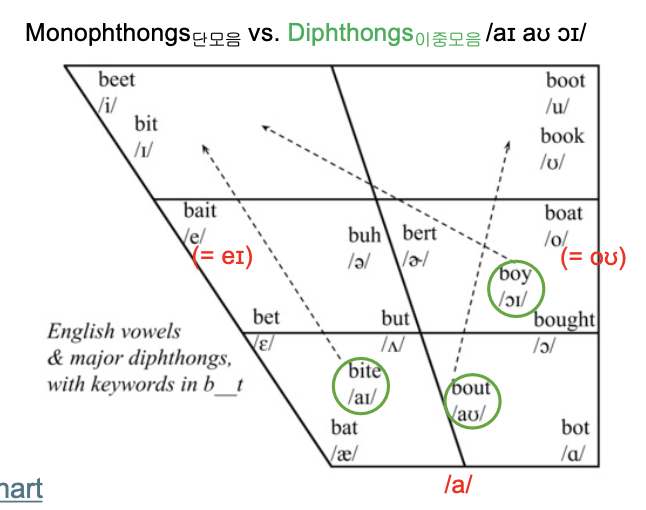
Vowels in American English (A.E)
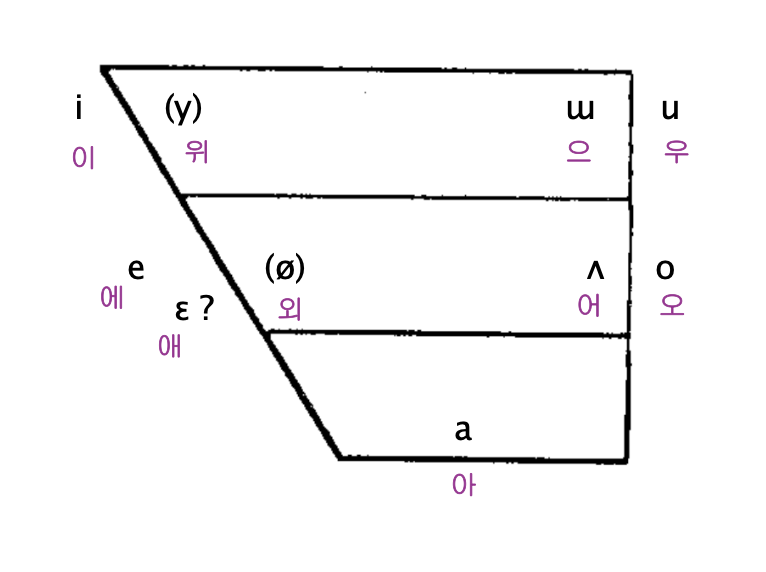
Vowels in Korean: traditional descriptions
Acoustics of Vowels
- formants: some frequencies amplified in the production of the sonorant sounds (e.g., vowels)
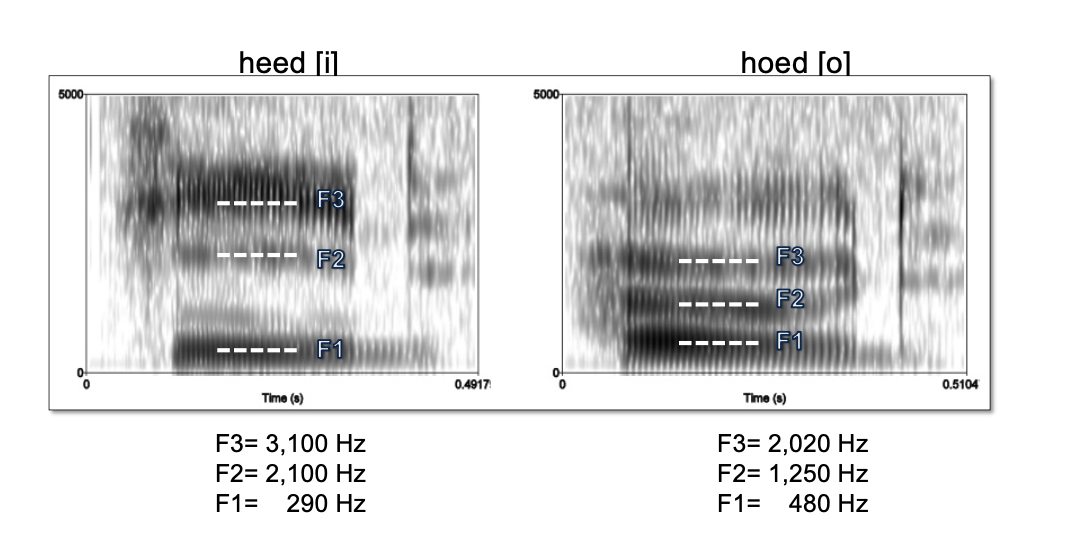
- Sound window > Formant > show formant
- Formant > formant listing: F1, F2, F3
- Formant > formant setting > Maximum formant (Hz): (approximately) Female spk 5,500 Hz; male spk 5,000 Hz
Acoustic cues to vowels:
- Height: characterized by F1, inverse relationship
- High Vs (low F1) vs. Low (high F1) Vs
- Backness: characterized by F2
- Front Vs (high F2) vs. back Vs (low F2)
- Role of F3
- Not so important in American English vowels except /ɚ/ (low F3)
- Sensitive to lip rounding
Spectrograms of English vowels
- (high) Front vowels: low F1, high F2
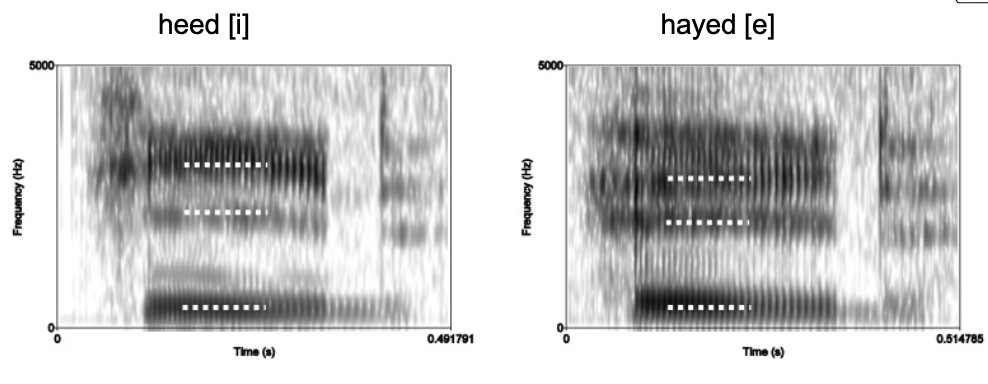
- (high) Back vowels: low F1, low F2
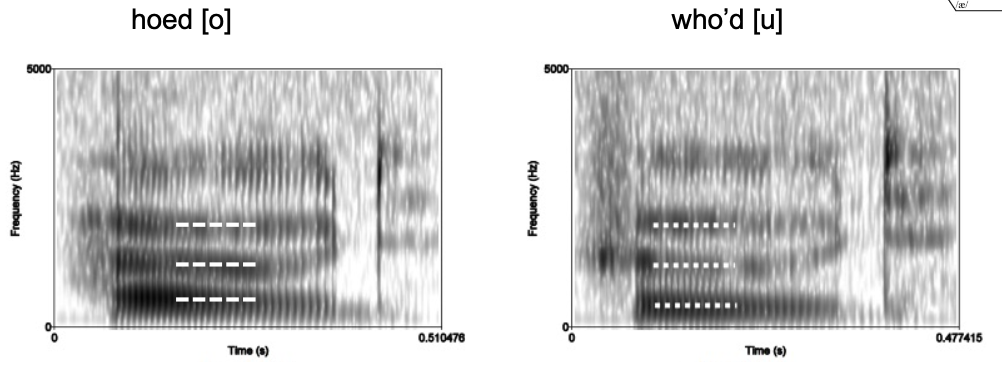
- (low) Back vowels: high F1, low F2
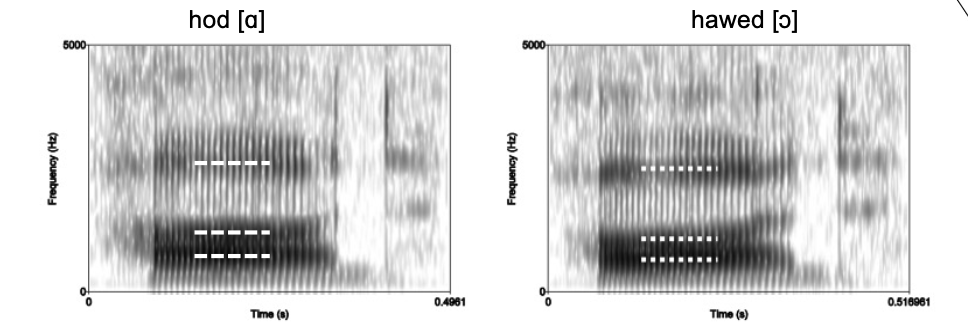
- Vowels can be tricky when F1 and F2 are essentially sitting on top of one another. If the formant looks “too fat”, it’s probably two formants.
- Expect about 4 (up to 5) formants for the 5,000 Hz view range.
- F0 might be shown at the bottom for low vowels.
Formant schematic
- (High) front Vs: large differences between F1 and F2
- (Central) low Vs: F1/F2 at around 1,000 Hz
- (high) Back Vs: low F1 and F2 (both lower than 1,000 Hz)
Diphthongs
- buy [aı]

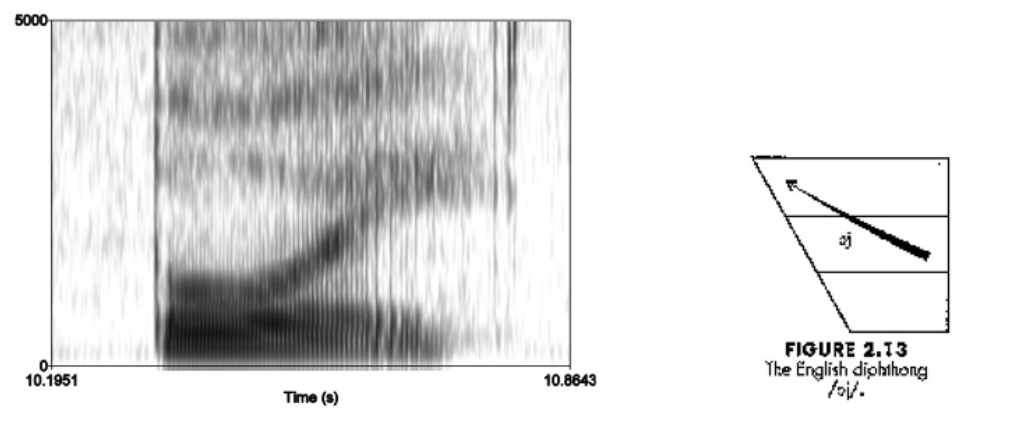
- boy [ɔı]
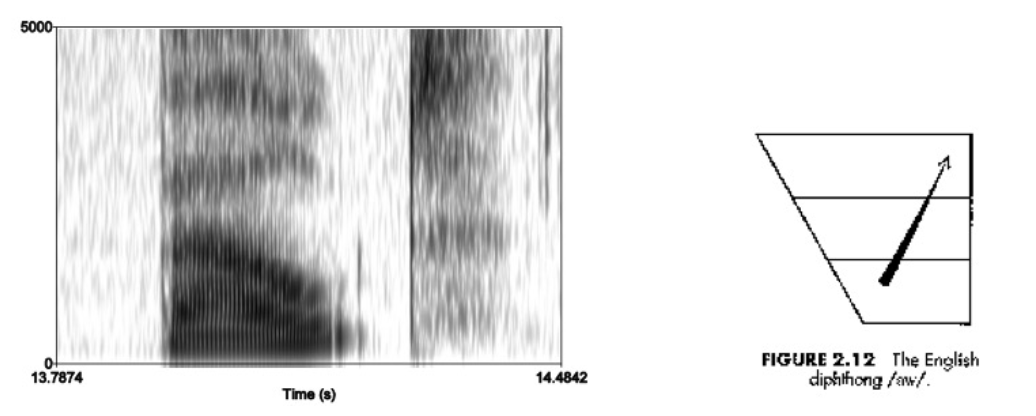
- bout [aʊ]
Rhotic vowels
- Acoustic characteristics of rhotic sounds: low F3